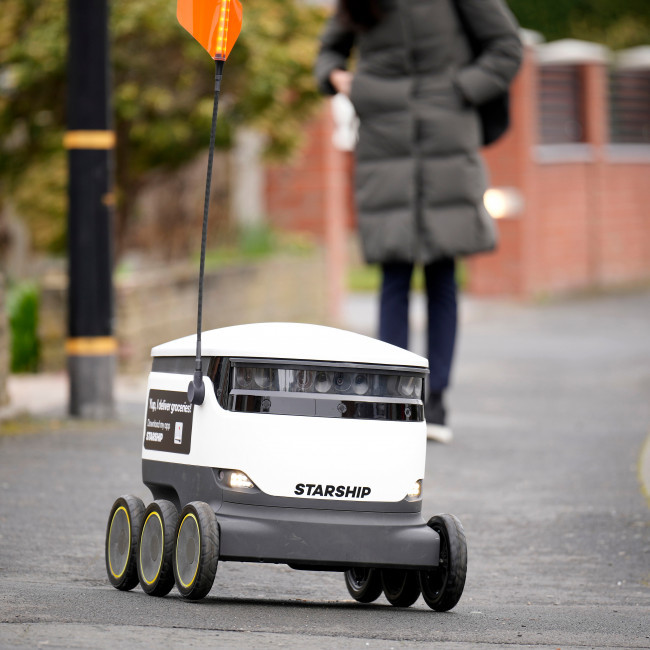
The UK Government is preparing to consult on legalising autonomous pavement delivery robots despite concerns from campaigners over pedestrian safety and accessibility.
Labour is preparing to legalise autonomous delivery robots on Britain’s pavements, with ministers set to launch a consultation on plans that would formally allow the machines to operate on public walkways.
The robots, which are already used to deliver groceries and takeaways in cities including Sheffield, Leeds, Reading, Cambridge, Bristol and Milton Keynes, could be permitted to travel on pavements at speeds of up to 4mph.
Although the machines are already operating in parts of the UK, the legal position surrounding their use remains unclear. Ministers hope new legislation will remove that uncertainty and provide a framework for future deployment.
The proposals have prompted concern from campaigners, who warn that wider use of the robots could make pavements less safe and accessible, particularly for disabled and elderly pedestrians.
Pedestrian charity Living Streets has urged the Government to abandon the plans, arguing that pavements should remain dedicated to people.
Chief executive Catherine Woodhead said: “Pavements are for people, and the operation of robots puts the safety of pedestrians at risk.
“Our pavements are already lousy, with dangerous obstacles from pavement parking to wheelie bins.
“It’s also deeply concerning that delivery robots are allowed to operate on pavements with no authority – something that would be unthinkable for a vehicle on our roads.”
The charity has also questioned why the robots have been allowed to operate without a clear legal framework and warned they could create barriers for wheelchair users, blind people and guide dogs.
Living Streets said the robots risk blocking narrow pavements, making them difficult to navigate safely.
Transport minister Lord Hendy previously acknowledged in Parliament that the machines present “potential risks”, but suggested they could be legalised through the creation of a new “low speed, zero emission” vehicle category as part of wider reforms to legislation covering mobility scooters.
He said any future framework would prioritise safety and allow local authorities to decide whether delivery robots should operate in their areas.
Starship Technologies, one of the leading companies developing autonomous delivery robots, is reportedly preparing a new generation of machines should the legal changes proceed.
A Government spokesperson said: “We welcome innovation and advances in technology have the potential to boost our economy, but it’s vital the safety of pedestrians and vulnerable road users is put first.
“We will update the law for delivery robots as soon as parliamentary time allows and following public consultation.”
Pavement delivery robots set to be legalised in UK