Investors wiped billions from SpaceX’s market value after the newly listed company revealed soaring investment in artificial intelligence infrastructure despite reporting strong revenue growth and outlining ambitious long-term expansion plans.
SpaceX shares slid sharply after Elon Musk’s space and technology company reported its first results as a listed business.
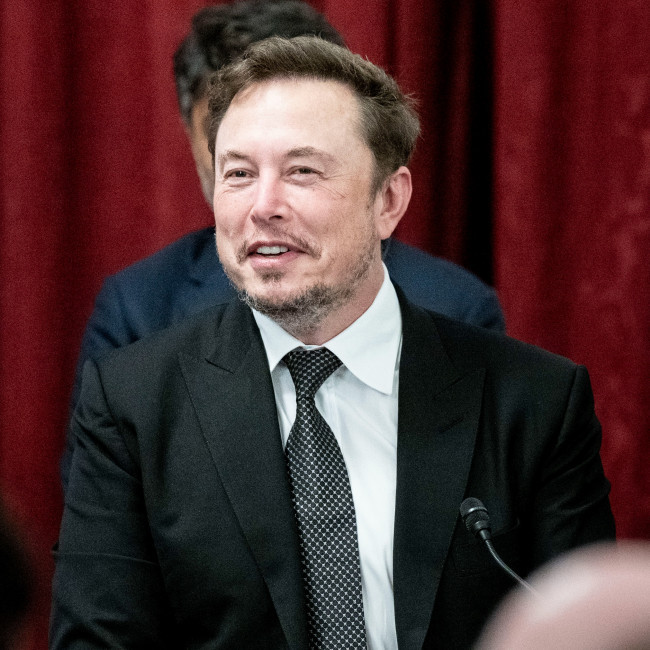
With investors unnerved by a dramatic increase in artificial intelligence spending despite surging revenue, the company, founded and led by Elon Musk, 55, reported quarterly revenue of $7.8 billion (£5.8 billion), almost double the figure recorded a year earlier.
However, total spending climbed to $18.3bn, more than six times higher than the previous year, with much of the increase attributed to investment in artificial intelligence infrastructure.
The results, released after SpaceX’s historic stock market debut in June, prompted a 9 percent fall in the company’s share price as investors weighed the costs of Musk’s long-term strategy.
SpaceX reported a net loss of $143 million for the three months to June and a $2 billion loss during the first half of the year.
Speaking during the company’s earnings call, Elon said investors were “underestimating” the business.
He also pointed to Starlink as the company’s strongest financial performer.
Elon added: “It’s not out of the question that, at some point, Starlink will operate most of the world’s internet.”
The entrepreneur also said SpaceX’s rapidly expanding artificial intelligence infrastructure business could become another major growth engine.
Elon’s company currently operates around 1.4 gigawatts of computing capacity for AI projects, serving customers including Google and Anthropic, with Musk saying capacity is expected to exceed 10 gigawatts next year as new data centres come online.
Reflecting on the scale of the investment programme, Elon said: “Data centres are a trivial problem compared to making reusable rockets.”
Although reusable rockets remain SpaceX’s defining business, the company’s space division reported a quarterly net loss of $542 million despite generating $962 million in revenue.
Its AI operation also remained loss-making, recording a deficit of $1.2 billion on revenue of $2.5 billion.
Bret Johnson, head of finance at SpaceX, told investors the company’s capital expenditure would continue at a “very similar” level for the remainder of the year.
Even so, Musk said he now believes SpaceX could generate annual revenue of $1 trillion by 2030, bringing forward his previous projection by a year.
The company remains best known for its Falcon rockets, the Starship programme and the Starlink satellite internet network, while its acquisition of social media platform X has broadened its technology portfolio.
Starship continues to play a central role in SpaceX’s ambitions for deep-space exploration and future missions to Mars, ambitions that Musk has repeatedly described as the company’s ultimate goal.
Analysts said the latest results highlight the extent to which artificial intelligence is becoming central to SpaceX’s future.
Matt Britzman, senior equity analyst at Hargreaves Lansdown, said the company “could soon resemble an AI infrastructure company with an extraordinary space business attached”.
He said: “Analysts are still trying to work out what the business should look like, while Elon Musk is already describing what it might become over the next decade.
“Starship and the next generations of Starlink remain critical to the post-2030 vision, but the financial engine over the next few years will increasingly be AI.”
Brady Wang, an analyst at Counterpoint Research, said Starlink’s subscription growth remained strong, although it is currently the company’s only business generating an operating profit.
Fabien Yip, an analyst at IG, said it was “a stretch” to conclude the entire company was being underestimated while its AI division continued to post heavy losses.
Wendy Souvannarath, chief executive of Carré Partners, which has invested in SpaceX, told BBC News that heavy AI spending reflected a broader trend across the technology industry.
She said: “Every tech giant is spending like this right now.”
Souvannarath added: “There is fact, there (are) figures, there is a vision that we can see.
“Half the planet has bad internet because cables never reached them. So basically Starlink puts the network in the sky instead.”
Elon Musk insists SpaceX is ‘underestimated’ after shares tumble amid AI spending fears