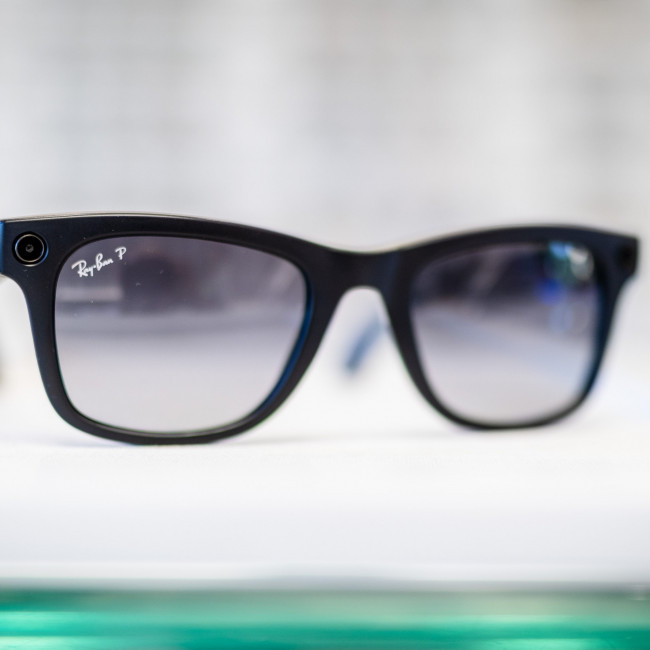
A newly granted Meta patent describes a hardware-based privacy switch that could physically disable sensors in smart glasses, amid growing concerns over covert filming.
Meta appears to be developing a “kill switch” for its smart glasses that could physically disable their cameras and other sensors.
A patent filed by the tech giant earlier this year and granted last week describes a “hardware privacy mute circuit” for consumer devices, including augmented reality glasses.
Although the patent does not specifically name Meta’s smart glasses, its illustrations closely resemble the company’s current products.
The system would allow one or more sensors to be switched off directly through the hardware.
Meta says this would create “tamper-resistant privacy controls” that could not be bypassed through software exploits.
That could make the glasses physically incapable of recording until the hardware switch was restored.
The patent comes as Meta faces growing criticism over the privacy implications of its camera-equipped eyewear.
The company launched its first smart glasses with Ray-Ban in 2021, and has since released several updated versions.
The glasses can take photographs and record video from a first-person perspective, raising concerns that people could be filmed without their knowledge or consent.
They already include a front-facing light that activates when the camera is recording.
However, online guides have demonstrated ways to conceal or disable the indicator, fuelling concerns about covert recording.
The latest patent could offer Meta a way to make such tampering harder by moving privacy controls from software into the device’s hardware.
There is no guarantee that the technology described in the patent will become a feature of future Meta glasses.
Companies routinely patent technologies they never commercialise.
The development comes as other businesses consider restrictions on the glasses.
UK cinemas are examining whether to prohibit or limit camera-equipped smart glasses over concerns they could be used to record films without permission.
The UK Cinema Association said many major cinema operators were considering policies covering wearable devices with built-in cameras.
The glasses have also faced restrictions in other public venues amid concerns about discreet recording.
Meta has defended its privacy measures, arguing that its camera indicator gives people a visible signal when photographs or videos are being captured.
However, the growing backlash has highlighted a challenge for wearable technology: unlike conventional cameras, smart glasses can be worn continuously while appearing similar to ordinary eyewear.
A hardware-based privacy switch could therefore give users, businesses and venues greater confidence that recording has been physically disabled, even if the glasses’ software were compromised.
Meta is seemingly working on ‘kill switch’ for smart glasses