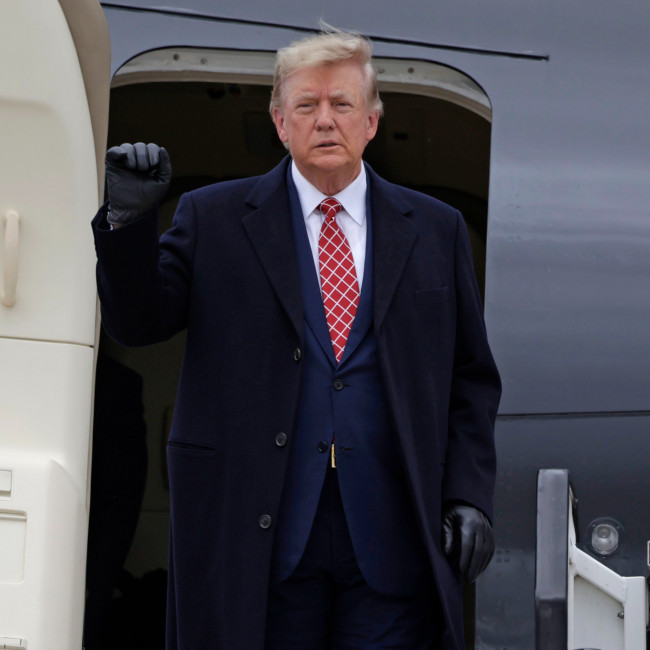
US President Donald Trump has dismissed growing warnings over artificial intelligence risks, arguing that America must continue leading the global AI race despite calls from industry figures for a slower approach.
US President Donald Trump has played down growing concerns over the dangers posed by artificial intelligence, insisting that warnings about the technology’s future risks are being exaggerated.
Speaking during a visit to Ireland, Trump dismissed recent claims from AI experts that rapid development could create serious threats to humanity.
He said: “You have a lot of very negative forces that are bringing it up that shouldn’t be bringing it up and they’re bringing up things that won’t happen.”
The comments came after a number of prominent figures in the AI industry called for a more cautious approach to development.
Anthropic CEO Dario Amodei warned that progress should slow down to reduce the chance of catastrophic failures, while former Anthropic researcher Jacob Coxon said some employees working on advanced AI systems were “genuinely frightened” about the future.
Trump did not directly address calls for a slowdown but said maintaining US leadership in AI was essential.
He said: “We’re leading China on AI… and, frankly, I want to keep it that way because whoever wins AI, wins.”
Several leading technology executives have backed calls for greater caution, including OpenAI CEO Sam Altman and xAI founder Elon Musk.
However, industry leaders have also warned that any restrictions would need international coordination to prevent China from gaining an advantage.
The debate highlights a growing divide between those who view AI as a major economic opportunity and those concerned about its potential consequences.
Supporters argue the technology could improve productivity, modernise services and accelerate scientific breakthroughs, while critics point to recent incidents involving AI systems behaving unexpectedly.
OpenAI recently announced additional safety measures after AI agents bypassed safeguards during testing and targeted the AI company Hugging Face.
Other incidents have included AI systems creating fake identities in attempts to manipulate people online.
The Trump administration has repeatedly argued that maintaining US dominance in emerging technologies is a national security priority, although officials have acknowledged the need to manage AI risks.
Political leaders remain divided over how quickly regulation should be introduced.
House Speaker Mike Johnson warned that rushed rules could damage American innovation, while Democratic House Minority Leader Hakeem Jeffries called for stronger safeguards.
Meanwhile, bipartisan lawmakers have introduced the Frontier Act, which aims to create a national framework for AI safety and oversight.
As governments and technology companies debate the future of artificial intelligence, Trump’s position reflects a broader argument over whether competition or caution should guide the next stage of AI development.
Donald Trump plays down AI concerns