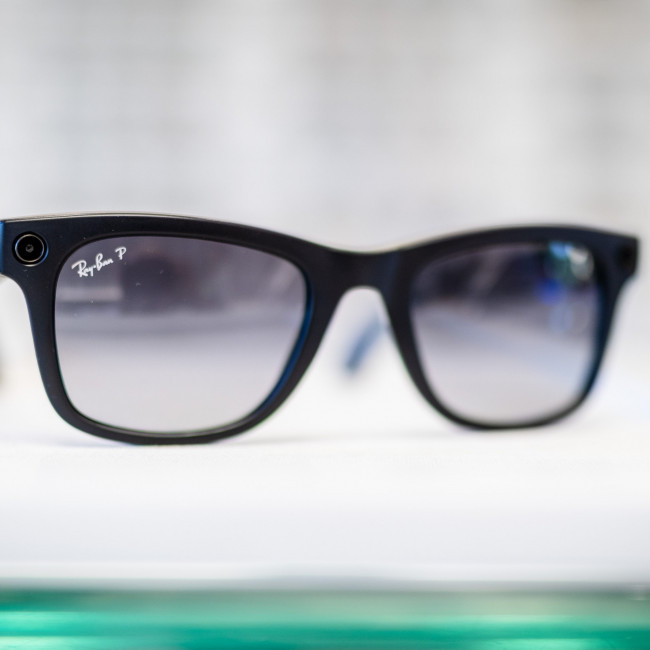
Australia’s government is considering banning camera-equipped smart glasses across public service workplaces amid growing concerns over privacy and security.
The Australian government is considering a ban on smart glasses across its offices and service centres amid growing concerns about privacy, security and the ability of the devices to record people without their knowledge.
Public service minister Katy Gallagher said she had asked the Australian Public Service for advice on whether camera-equipped smart glasses should be prohibited across Commonwealth workplaces.
Gallagher said: “We need clear and consistent guidance for public servants.
“Smart glasses can raise legitimate privacy and security concerns, particularly because of their ability to record and capture information.”
The potential ban would apply across a wide range of government facilities, including administrative offices, Centrelink service centres and research facilities operated by organisations such as CSIRO.
Prime Minister Anthony Albanese’s government said it was seeking to establish a world-leading approach to managing the technology.
However, it has not proposed a national ban on importing smart glasses and has instead encouraged individual organisations to decide how they should be used.
State governments would continue to set their own rules for schools and hospitals.
Smart glasses have become increasingly popular because they allow users to take photographs, record video and access digital features through wearable devices.
However, privacy campaigners have raised concerns that people may be recorded without their consent.
A University of Sydney study examining videos recorded using smart glasses and shared on Instagram found that 60 per cent of a sample could be classified as potential harassment.
Several organisations have already introduced restrictions on the devices.
Courts in England and Wales, along with New York state in the US, have banned their use in certain settings.
The US Immigration and Customs Enforcement agency has reportedly treated the glasses as body-worn cameras and prohibited them from federal workplaces.
Australian councils have also moved to restrict their use in public spaces.
Canterbury-Bankstown Council in Sydney recently banned smart glasses from public swimming pools, while Brisbane City Council became the first Australian council to introduce a similar restriction at pools.
Melbourne’s Yarra City Council has prohibited the devices in playgrounds, childcare centres and gyms, while other councils have introduced rules preventing pool users from recording with smart glasses.
Federal attorney general Michelle Rowland said councils were responding to genuine community concerns but stressed that any rules needed to balance privacy with accessibility.
Rowland said: “Businesses know that good privacy is good business.
“But we want to make sure we get the balance right and we don’t unfairly discriminate against people who are using this technology to better participate in society.”
The government’s review comes as authorities worldwide continue to debate how existing privacy laws should adapt to increasingly advanced wearable technology.
Australian government considers banning smart glasses in its offices