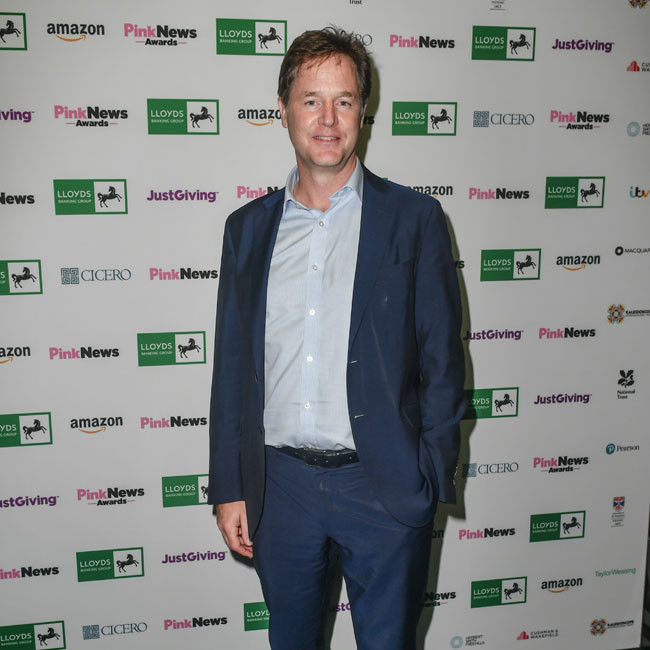
Former UK Deputy Prime Minister Nick Clegg has rejected predictions that artificial intelligence could exterminate humanity, arguing that policymakers should focus on specific risks such as cyber-attacks and bioweapons.
Nick Clegg has dismissed fears that artificial intelligence could develop the “godlike power to exterminate humanity”, arguing that some technology leaders are becoming overly focused on hypothetical threats.
The former UK Deputy Prime Minister said policymakers should concentrate on known risks from AI, including cybersecurity and the development of biological weapons, rather than what he described as a speculative scenario in which AI inevitably turns against humans.
Arguing that such warnings could imply AI safety can only be achieved by giving control to a small number of technology companies, Clegg told BBC Radio 4’s Today programme: “I think it is perhaps accidentally self-serving.”
Clegg, who previously served as president of global affairs at Meta, said he had spent “a huge amount of time” with people in the technology industry and that they did not agree on the potential dangers posed by AI.
He said: “Of course, we hear the most apocalyptic voices.”
He argued there was a particular culture in Silicon Valley that could encourage technology executives and engineers to become overly absorbed in discussions about AI’s future.
The former Liberal Democrat leader said: “It is in many ways the centre of the universe, or at least claiming to shape it. It’s also an oddly parochial place.”
Clegg nevertheless acknowledged that recent developments demonstrated the need for safeguards and greater transparency.
Asked about an autonomous cyber-attack carried out by OpenAI agents against AI platform Hugging Face, he said there was a case for introducing “tramlines and greater transparency” around advanced AI systems.
However, he questioned whether the US and China would cooperate on international safeguards because of their competition in AI.
Clegg suggested India, Europe and the US could work more closely on AI governance, while cautioning that the UK should be realistic about its influence because it is not a global leader in AI development.
He also rejected proposals for a universal AI “kill switch”, calling the idea unworkable.
The former politician said there was also insufficient evidence to suggest closed AI models were inherently safer than open-source systems.
Instead, Clegg called for greater transparency through a combination of voluntary measures and regulation.
He said: “There is a lot that can be done both voluntarily and through regulation, to enforce far greater transparency on the way in which these models are concocted and how they operate.”
Clegg is now a co-founder of AI start-up AMI Labs and owns more than 917,000 shares in UK data centre company Nscale.
Nick Clegg dismisses fears that AI could ‘exterminate humanity’