NASA is developing humanoid robots designed to work alongside astronauts on future Moon and Mars missions, taking on dangerous tasks and preparing bases while humans focus on exploration.
NASA is developing humanoid robots that could one day work alongside astronauts on the Moon and Mars, carrying out dangerous and repetitive tasks while helping make deep-space missions safer.
The machines are being developed by a 16-member Dexterous Robotics Team at NASA’s Johnson Space Center in Houston, Texas.
The team is working on hardware and software that could allow robots to operate reliably in some of the most hostile environments encountered during space exploration.
Potential jobs include repairing equipment, moving supplies, inspecting spacecraft and maintaining extraterrestrial bases.
NASA stresses that the robots are intended to assist astronauts rather than replace them.
Shaun Azimi, head of NASA’s Dexterous Robotics Team, said: “Our team is not trying to replace human explorers with robots but instead make human exploration safer and more sustainable.”
He added: “If we can send more capable robots, we can reduce the risk and make people more effective in doing the things that people do best.”
Astronauts travelling beyond Earth face radiation, extreme temperatures, vacuum conditions and abrasive lunar or Martian dust.
Robots could operate in many of these conditions without the same risks to human health.
They could also remain at remote outposts for extended periods, potentially preparing facilities and carrying out maintenance before astronauts arrive.
NASA’s latest work builds on years of research into humanoid machines, including Robonaut 2, which was tested aboard the International Space Station.
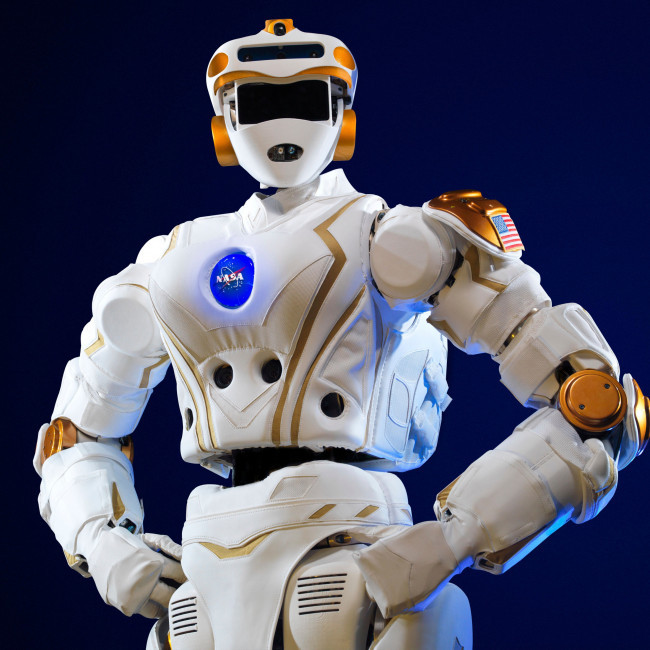
Another project is Valkyrie, also known as R5, a 6ft 2in humanoid robot originally developed for the 2013 DARPA Robotics Challenge.
The 300lb (136kg) machine has 44 degrees of freedom and can operate using mains power or a battery.
Its human-like design could allow it to use handles, doors, tools and workspaces already designed for astronauts, reducing the need to develop entirely new equipment for robotic workers.
NASA is testing robotic technology at its Integrated Mobile Evaluation Testbed for Robotics Operations, known as iMETRO, at Johnson Space Center.
One of the biggest challenges is giving the machines enough autonomy to operate without constant instructions from Earth.
Communication delays become increasingly significant as spacecraft travel farther from Earth.
Signals between Earth and Mars can take many minutes to travel in either direction, making real-time control impossible.
Humanoid robots capable of making decisions and adapting to changing conditions could therefore become an important part of future missions, allowing astronauts to focus on exploration while their robotic colleagues handle some of the most hazardous work.
NASA is developing humanoid robots to assist humans on moon and Mars missions