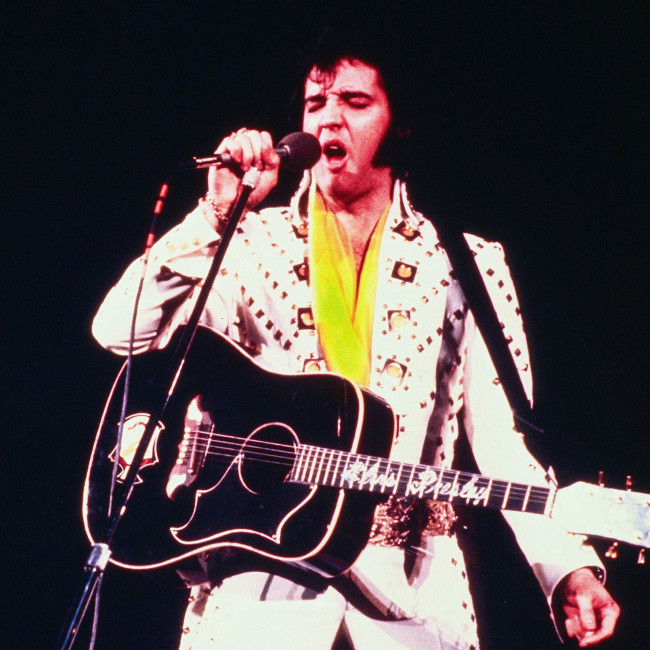
The owners of Elvis Presley’s music catalogue are suing Anthropic for allegedly using 274 of the singer’s songs to train its AI models without permission, seeking about $41 million in damages.
Anthropic is being sued by the owners of Elvis Presley’s music catalogue, who allege the artificial intelligence company used 274 of the singer’s songs to train its AI models without permission.
The lawsuit was filed on Friday (23.10.26) by Authentic Brands Group, which owns the rights to the King of Rock and Roll’s music and likeness.
It accuses Anthropic of copyright infringement involving songs including Can’t Help Falling in Love, All Shook Up and A Little Less Conversation.
The plaintiffs are seeking $150,000 for each allegedly infringed song, which would amount to about $41 million (£31 million).
The case, first reported by Billboard, is among the first major copyright lawsuits brought directly by an artist’s estate or rights holder against an AI developer.
Its outcome could help establish how AI companies are allowed to use existing music catalogues when developing their models.
Lead attorney Richard Busch wrote in a lawsuit: “The Elvis plaintiffs bring this action to enforce these exclusive rights against the defendant that has built its entire business model based on copyright infringement at a scale never seen before.”
The claim alleges that Anthropic’s Claude AI model can produce infringing material based on copyrighted music available online.
It also argues that Anthropic knowingly continued to infringe copyright despite introducing safeguards intended to prevent users from generating protected material.
Anthropic has not publicly responded to the allegations.
AI companies have faced growing legal challenges over the use of copyrighted material in training models.
Music organisations and record labels, including Sony, Universal and Warner Records, have also pursued copyright claims against AI firms.
AI music systems typically analyse large quantities of recorded music to learn patterns in sounds, structures and musical expression.
Users can then generate new material using text or spoken prompts.
The rapid development of these systems has raised concerns among musicians about their work being used without permission and the potential impact of AI-generated music on the livelihoods of human artists.
The Elvis lawsuit comes as streaming platforms face a separate challenge from the rapid growth of AI-generated music.
Spotify said last week that it had removed about 50 million tracks regarded as AI-generated “slop” from recommendations over the previous year.
The Presley case could therefore become an important test of how copyright law applies to the training of AI models, as artists and rights holders seek greater control over how their work is used by the technology industry.
Anthropic sued for using 274 Elvis Presley songs to train AI models