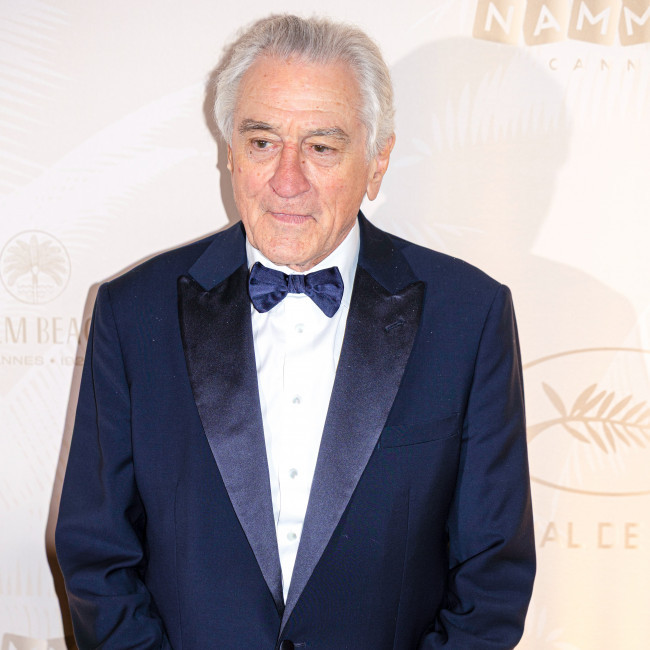
Civil rights leader Rev. Jesse Jackson has died at the age of 84 with a statement revealing he passed away “peacefully” surrounded by his loved ones.
Rev. Jesse Jackson has died “peacefully surrounded by his family”.
The celebrated civil rights leader passed away on Tuesday (17.02.26) at the age of 84 after a long struggle with declining health including a Parkinson’s disease diagnosis and a battle with progressive supranuclear palsy (PSP), which affects walking and swallowing.
A message released by Jackson’s Rainbow PUSH Coalition reads: “It is with profound sadness that we announce the passing of civil rights leader and founder of the Rainbow PUSH Coalition, the Honorable Reverend Jesse Louis Jackson Sr.
“He died peacefully on Tuesday morning surrounded by his family …
“Public observances will be held in Chicago. Final arrangements for Reverend Jackson’s celebration of life services, including all public events, will be released by the Rainbow PUSH Coalition.”
Jackson’s family added in a statement: “Our father was a servant leader – not only to our family, but to the oppressed, the voiceless, and the overlooked around the world.
“We shared him with the world, and in return, the world became part of our extended family. His unwavering belief in justice, equality, and love uplifted millions, and we ask you to honor his memory by continuing the fight for the values he lived by.”
Jackson – who grew up in South Carolina – came to prominence in the civil rights era working alongside Rev. Martin Luther King Jr. and becoming part of his inner circle.
He marched alongside King in 1965 in Selma, Alabama and was with him on the day he was assassinated in Memphis, Tennessee in 1968.
Jackson was ordained later that same year despite dropping out of a course at Chicago Theological Seminary to focus on his civil rights work with King.
After King’s death Jackson founded Chicago-based organisation PUSH in 1971 to continue the fight and he went on to create the Rainbow Coalition, to focus on social justice through voter engagement and representation, and they later merged in 1996 to form the Rainbow PUSH Coalition.
Speaking about the killing of his mentor, Jackson told the Guardian newspaper in 2018: “They loved him as a martyr after he was killed but rejected him as a marcher when he was alive.
“We tend to embrace martyrs. In many ways he has a moral authority now you wouldn’t see if he was still alive. He is a universal frame of reference for moral authority, the global frame of reference for nonviolent justice and social change. If he had not died, that probably would not be the case.”
Jackson went on to make the leap into politics in the 1980s, running for the White House twice – in 1984 and 1988 – and he later worked as special envoy under US President Bill Clinton, who awarded him the Presidential Medal of Freedom in 2000.
Jackson went public with his Parkinson’s disease diagnosis in 2017 revealing his father had also struggled with the same condition.
At the time, the civil rights activist said: “After a battery of tests, my physicians identified the issue as Parkinson’s disease, a disease that bested my father.
“Recognition of the effects of this disease on me has been painful, and I have been slow to grasp the gravity of it.”
He took a step back from public life in recent years to focus on his health.
Jackson is survived by his wife Jacqueline and six children.
Jesse Jackson dies ‘peacefully surrounded by family’