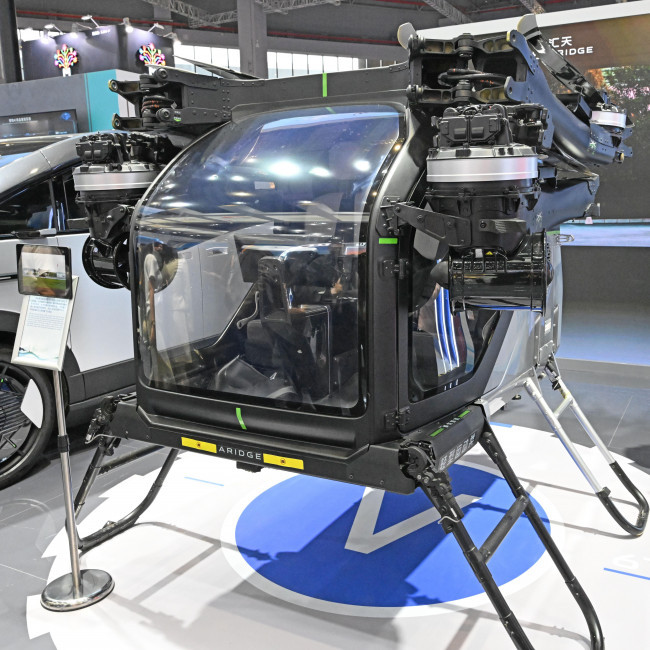
Chinese company XPeng says its two-seater electric flying vehicle could enter limited recreational and emergency use in China from the second half of 2027.
Flying cars could become a reality for some users in China as soon as next year, after Chinese manufacturer XPeng said its two-seater electric aircraft could be ready for limited use from the second half of 2027.
XPeng chief executive Deli Zhao said the $300,000 (£225,000) vehicle would initially be available to recreational users in approved rural locations and emergency services.
The company has spent around a decade developing the technology, including testing flying motorbikes at its base in Guangzhou.
The vehicle has now received approval from China’s civil aviation authorities for limited use.
Despite being described as a flying car, the vehicle does not have wheels and more closely resembles a helicopter-style drone.
Its cockpit is roughly the size of a Fiat 500 and it is lifted into the air by six battery-powered propellers.
The vehicle can be controlled using a joystick or fly autonomously to a programmed destination.
Zhao, who is a trained pilot, said he believed the controls were simple enough for someone to learn in around five minutes.
Speaking at the Web Summit in Lisbon, where a prototype attracted large crowds, he said: “The world where everyone can be a captain is about to arrive.”
The $300,000 price includes a six-wheel van, roughly the size of a Ford Transit, which transports the aircraft. The flying vehicle can then unfold from the back of the van.
XPeng’s initial target customers include people interested in “diving, surfing, off-roading and flying”, while the aircraft could also be used by emergency services to reach difficult locations.
However, its initial capabilities will be heavily restricted.
The vehicle will only be permitted to operate in approved park areas in China and has a flight range of around 30km (18.6 miles).
XPeng plans to increase that range by doubling the battery’s energy density to 400 kilowatt-hours per kilogram.
The development comes as China promotes its “low-altitude economy”, which includes drones and other aircraft operating close to the ground.
The strategy is expected to develop from cargo flights towards passenger services, initially in rural areas before potentially expanding into cities.
Zhao said XPeng was one of around 20 Chinese companies developing flying vehicles.
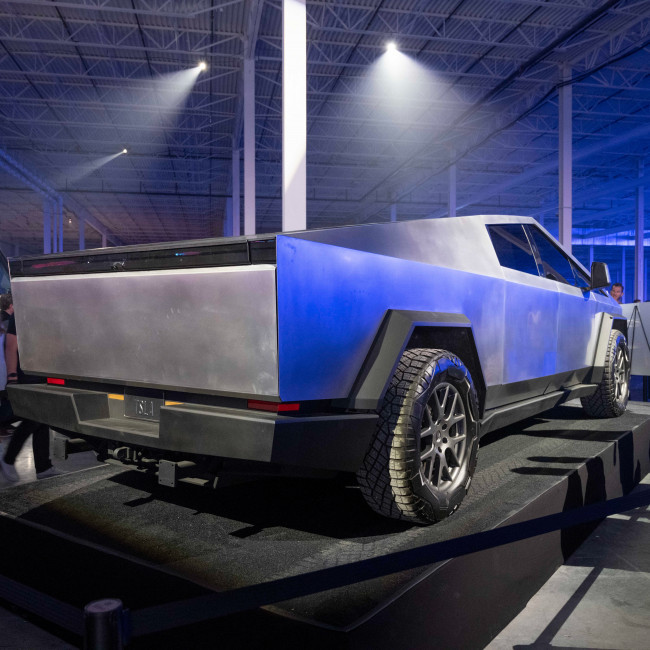
He also dismissed Elon Musk’s recently demonstrated flying Tesla, saying it was “really hopping or jumping and not really flying”.
Zhao explained that XPeng hopes to enter European markets “as soon as possible” and claimed the company had already signed agreements with the United Arab Emirates and countries in south-east Asia.
‘Flying cars’ could launch in China next year