After winning US Food and Drug Administration approval, Elon Musk has been recruiting the first human guinea pigs to trial his brain-computer interface.
Elon Musk has been recruiting the first human guinea pigs to trial his brain-computer interface.
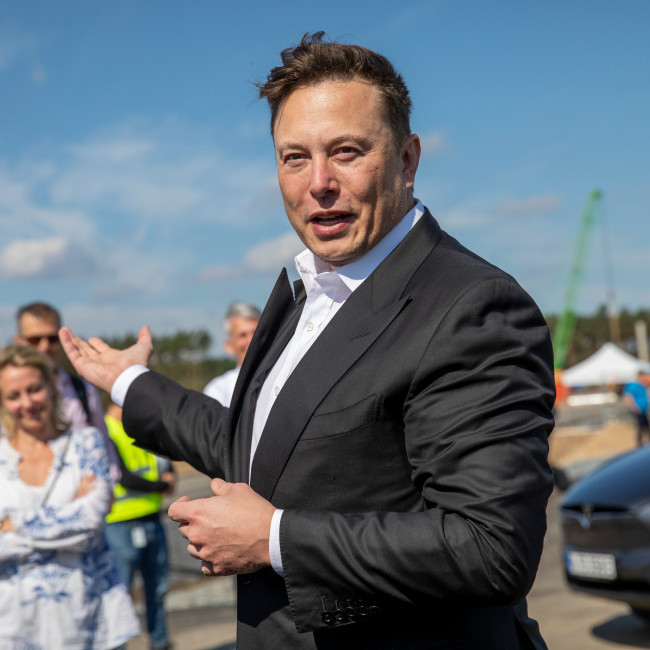
The Tesla, X and SpaceX owner, 52, set up Neuralink to connect human brains to computers and to test the technology on people with paralysis.
A robot will help implant a BCI (brain-computer interface), which will let them control a computer cursor, or type, using thoughts alone.
Neuralink won US Food and Drug Administration approval for its first human clinical trial, in May, with the company hailing the FDA green light as an “important first step that will one day allow our technology to help many people”.
The company had sought approval to implant its devices in 10 people, former and current employees have said.
The number finally agreed upon is not known.
Neuralink’s study will see a robot surgically place 64 flexible threads – which are thinner than a human hair ¬– on to a part of the brain that controlled “movement intention”.
The wires will allow Neuralink’s experimental implant, powered by a battery that can be charged wirelessly, to record and transmit brain signals wirelessly to an app that decodes how the person intends to move.
The company says people may qualify for the trial if they have quadriplegia due to injury or amyotrophic lateral sclerosis.
Elon’s company faces rivals including Blackrock Neurotech, which implanted its first of many BCIs in 2004.
Two separate recent studies in the US saw implants used to monitor brain activity when a person tried to speak, which could then be decoded to help them communicate.
Dr Adrien Rapeaux, a research associate in the Neural Interfaces Lab at Imperial College London, told the BBC: “Neuralink no doubt has an advantage in terms of implantation”, as their procedure was robotically assisted.
But Dr Rapeaux – who is also a co-founder of a neural implant start-up Mintneuro – said it wasn’t clear how their method for converting brain signals into useful actions would do better than that used by the likes of Blackrock Neurotech.
Elon Musk recruits first human guinea pigs for brain-computer interface