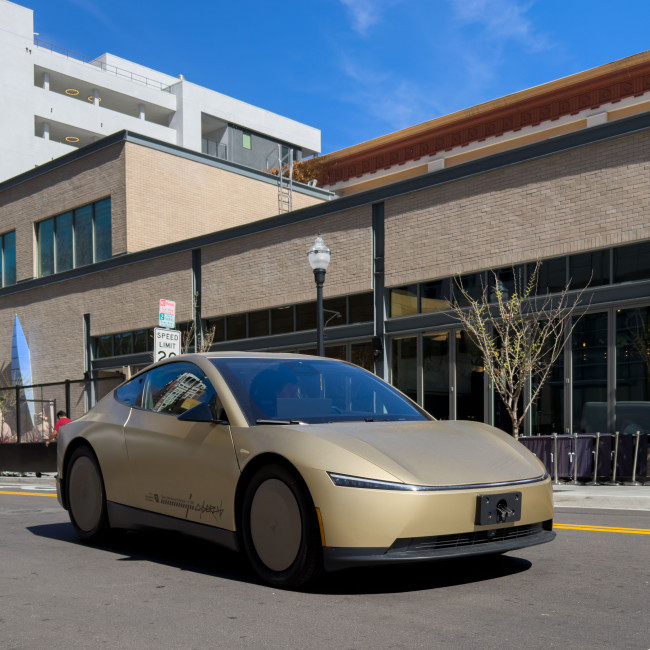
Tesla’s Cybercab may need to be physically pushed out of the way by emergency workers if it stalls, highlighting fresh safety challenges for the company’s driverless robotaxi rollout.
Tesla’s new Cybercab may need a “push” from emergency workers if it stalls in the road, according to guidance the company has given first responders.
The warning appears in a 69-page first responder interaction plan published by Tesla and submitted to the Texas Department of Public Safety in July.
It highlights a particular challenge posed by the Cybercab’s design, as the vehicle has no steering wheel or pedals that would allow police officers or firefighters to drive it away from danger.
The guide says: “In situations where there is minimal risk of fire or high voltage exposure and low voltage power is present, Cybercab can be quickly pushed in order to clear the roadway.”
However, Tesla warns that pushing the vehicle when it is not in neutral or tow mode could cause the motor to overheat and create a risk of electric shock if electrical components are exposed.
The Cybercab’s parking brake can also engage automatically if the vehicle is rolled faster than 5mph or if its low-voltage battery runs down.
The vehicle weighs 3,113lb, according to information Tesla submitted to the US Environmental Protection Agency in May.
The guide tells emergency workers to contact Tesla through the vehicle’s communications system or by phone during most emergencies.
The company may be able to move the vehicle remotely, provide access to controls or place it in neutral so it can be pushed.
Tesla also warns first responders that the Cybercab “moves quietly, so never assume it is powered off” and instructs them to “cage the vehicle first” before interacting with it.
The guidance comes as Tesla begins deploying Cybercabs in Austin, Texas.
The rollout is already facing scrutiny, with the National Highway Traffic Safety Administration opening an investigation into whether the vehicle complies with federal safety requirements.
Tesla and chief executive Elon Musk did not respond to requests for comment.
Austin police said Tesla had provided training to first responders on how to safely move the vehicles.
Autonomous vehicle operators have faced growing scrutiny over how their cars behave around emergency services. Waymo vehicles have previously been involved in incidents involving police and ambulances.
The Cybercab, which Musk has described as “the future of transportation”, is designed to operate without a human driver. Its unusual controls and autonomous systems mean emergency workers must follow specialised procedures if something goes wrong.
Colorado lawyer Donald Slavik said autonomous vehicles should be held to the same safety standards as conventional cars.
He said: “They’ve got to be held to the same standard as a human driver. My concern is not just for the occupants of the vehicle but also for the rest of us.”
Tesla Cybercabs need a ‘push’ if they stall in the road