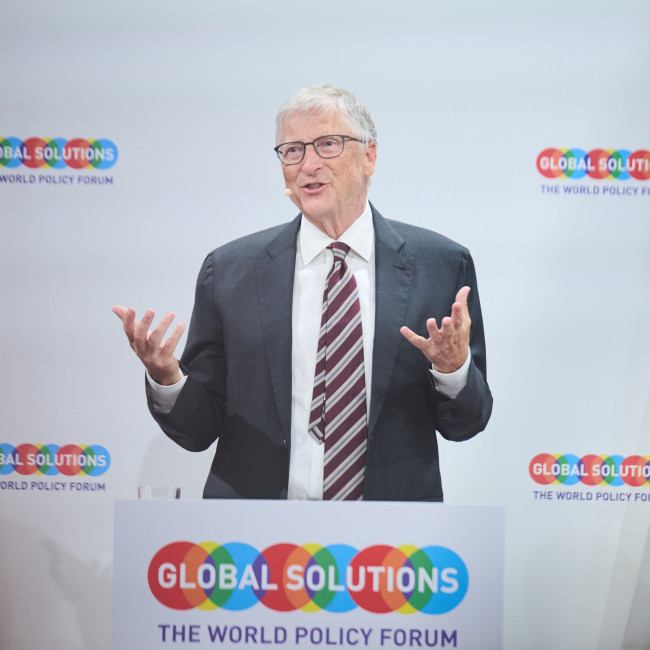
Microsoft co-founder Bill Gates has warned that artificial intelligence could eventually replace almost every human job, calling for taxes on AI-generated wealth and protections for roles that should remain human.
Bill Gates has warned that artificial intelligence could eventually replace almost every human job, describing the technology as an “evolutionary event” that will fundamentally transform the world of work.
The Microsoft co-founder said governments should consider taxing AI and reserving some jobs for humans as machines become capable of performing increasingly sophisticated tasks.
In an interview with The Observer, Gates said AI would eventually replace human skills across the economy, from invention and white-collar work to physical labour carried out by humanoid robots.
He compared the development of artificial intelligence with the transformation of “monkeys [into] humans”, saying machines were creating a new form of intelligence that could overcome the biological limitations of human cognition.
Gates said: “The most intelligent thing is being redefined.”
He predicted that AI would increasingly lead breakthroughs in mathematics, science and engineering, arguing that machines were already becoming superior to humans at some of these tasks.
He said: “We’re at a pretty dramatic point in history.”
Gates said he had personally experienced the pace of change, revealing that his own coding skills had effectively become obsolete despite having spent much of his life developing them.
While he once dreamed of becoming the world’s best programmer, the 70-year-old businessman said: “That day passed some time ago.”
Gates has previously warned that governments are unprepared for the economic disruption caused by AI.
In an essay published in August, he suggested creating “human-reserved” jobs that AI would not be permitted to replace.
He now argues that governments could also tax the wealth generated by AI companies to help fund support for people displaced by automation.
Gates said: “The incentive structure is wrong. It’s, ‘Hire the robot, fire the human, and don’t look back.'”
He warned that widespread automation could increase overall prosperity while simultaneously reducing the tax revenue available to support unemployed workers, creating a major test for governments.
Gates also raised concerns about AI safety, saying that within three to four years there could be “very serious” challenges involving the alignment and control of increasingly capable systems.
However, he said AI could also deliver major benefits, including reducing NHS waiting lists and accelerating drug discovery.
Gates called for governments to “accelerate the good stuff and minimise the bad stuff through legislation”, arguing that the US and China should treat some AI risks as a shared challenge for humanity rather than a competition between nations.
Bill Gates predicts that AI will replace almost all human jobs