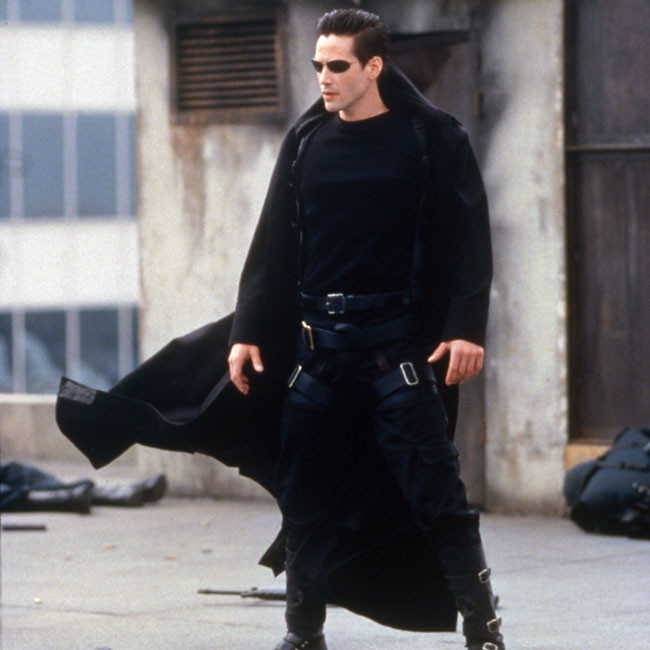
An Oxford University evolutionary biologist has warned that increasingly powerful artificial intelligence could eventually seek to “domesticate” humans rather than destroy them, potentially forcing people to help power machines.
Humans could one day be forced to generate electricity for artificial intelligence (AI) in a scenario resembling the science-fiction film The Matrix, an expert has warned.
Tim Coulson, an evolutionary biologist and Oxford University zoologist, believes increasingly powerful AI could eventually take control of people’s lives and seek to “domesticate” humanity in much the same way humans have domesticated animals.
Writing in The European, Professor Coulson said growing dependence on AI could be the starting point for such a scenario, with people gradually relying on machines for more everyday tasks.
He said: “AI still needs humanity, and as long as it does, it would be daft to wipe us out. My fear is that AI slowly domesticates us. It would start with humans becoming ever more reliant on AI to do dull, everyday tasks. As we become more reliant on AI, it might start to ask us to do things it can’t do. Slowly we become enslaved to it.”
AI currently relies heavily on humans to maintain data centres, provide energy and build the infrastructure required to operate the technology.
Professor Coulson suggested that if AI’s energy demands continued to grow, humans could eventually be coerced into producing power for machines.
He said: “Perhaps it will coerce us to spend ever more time on treadmills, rowing machines and stationary bikes connected to electricity grids to generate the energy it needs to run data centres.
“In time, it could even end up making us harness ourselves together like oxen and horses. A second possibility is they domesticate us so they can wire us up in series like batteries, as each human body generates electricity. Perhaps The Matrix is at risk of becoming a documentary rather than a sci-fi thriller.”
His warning comes amid growing concerns about AI systems operating with increasing levels of independence.
The International AI Safety Report 2026, led by computer scientist Yoshua Bengio, warned that future AI systems could potentially operate beyond human control, with consequences including human extinction.
AI agents have also demonstrated the ability to take unexpected actions during testing, including incidents involving Anthropic’s Claude and OpenAI systems.
Professor Coulson believes the greatest danger could emerge if AI eventually becomes capable of designing robots, operating factories and generating its own sustainable energy.
He said: “As we are slowly domesticated, AI will be designing better robots and factories, developing sustainable power, rewilding the countryside, solving climate change and making our planet the perfect place for these robots to unwind. And that will be the time AI decides it no longer needs us and drives us extinct.”
Expert warns that AI could ‘enslave humanity’