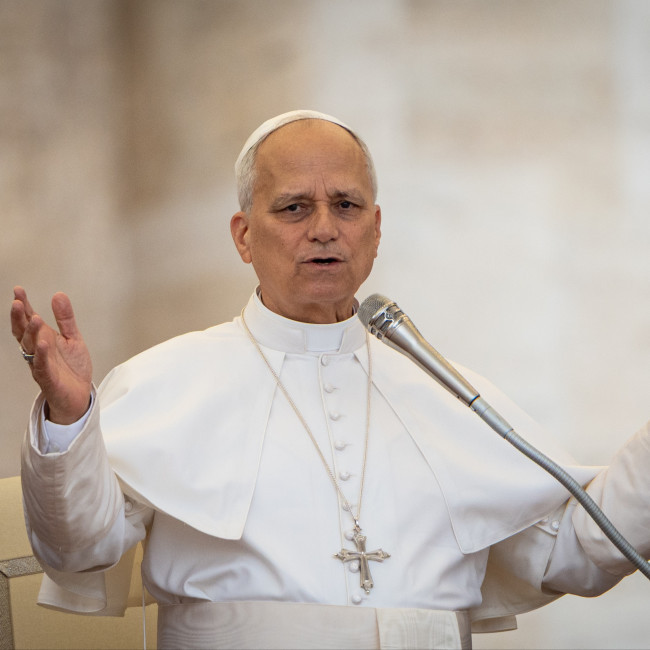
A collection of Pope Leo XIV’s writings and speeches has been certified as human-authored, following the pontiff’s warnings about the risks artificial intelligence poses to humanity.
A collection of speeches and writings by Pope Leo XIV has been certified as human-authored, just weeks after the pontiff warned that artificial intelligence could become one of the greatest challenges facing humanity.
The certification was carried out by Proudly Human, an Australian company founded by former Australian chief scientist Dr Alan Finkel, in collaboration with publisher the Australian Catholic University and representatives from the Vatican.
The review focused on Maps of Hope, a collection published in May alongside Pope Leo’s first encyclical, Magnifica Humanitas. In the document, Leo called for artificial intelligence to remain under human control and warned against the technology “dominating humanity”.
The pontiff argued that AI should be “human-friendly”, widely accessible and subject to open discussion and debate, highlighting concerns over the concentration of technological power among a small number of organisations.
Finkel said he was confident before the review began that the speeches had been written by a human, and the collection was certified within a day of assessment.
Proudly Human’s certification process requires authors or their representatives to verify their identity and sign a declaration confirming that AI was not used to produce first drafts, sentences or paragraphs.
The company then analyses submitted work using multiple AI detection systems alongside its own evaluation methods.
Finkel said: “We use a suite of four or five of them and our own averaging algorithm, and we test that suite every night to make sure that they’re really continuously fit for purpose.”
He added that Maps of Hope passed the assessment as “basically purely human”.
The company said certifications are based on information provided by authors and the checks carried out during the process, meaning they can be withdrawn if claims about authorship are found to be inaccurate.
Finkel said the goal was to give readers greater transparency at a time when AI-generated content is becoming increasingly common online.
He explained: “They deserve to know. I actually think it’s a fundamental right [for] human beings.
“If you’re sitting in a church and you’re expecting that that is the genuine expertise, religious wisdom, of the priest who’s delivering the sermon.”
Australian Catholic University president Professor Zlato Skrbis said that, amid the rapid growth of AI-generated material, it was increasingly valuable to confirm when work reflected “human reflection and judgement”.
Pope Leo’s speeches declared human-authored following his AI warnings