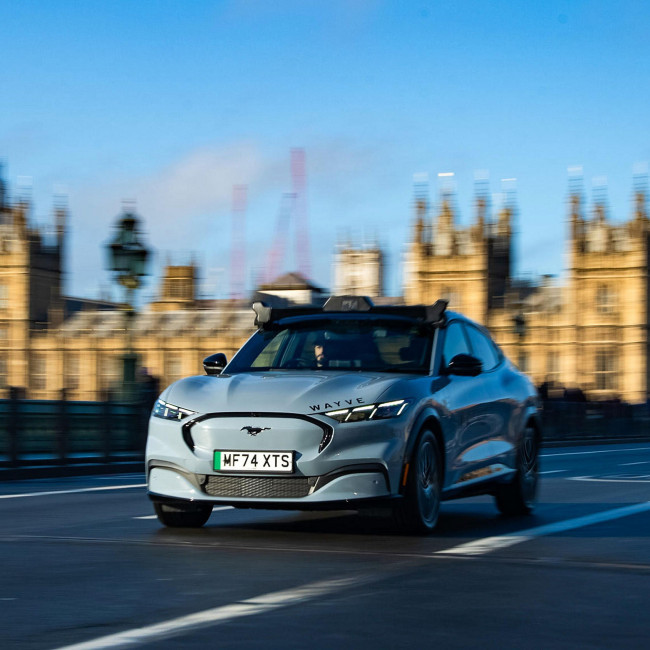
Uber and autonomous driving company Wayve have received approval to begin offering self-driving taxi rides in London, with safety drivers remaining behind the wheel during the first phase.
Londoners could soon be among the first passengers in the UK to experience self-driving taxis, after Uber and autonomous vehicle developer Wayve received licences to begin operating in the capital.
The companies have been granted private hire vehicle licences by Transport for London (TfL), allowing them to offer paid journeys using autonomous technology.
The first trips are expected to begin “later this summer”, although a human safety driver will still be present during the initial rollout.
Uber and Wayve are preparing 15 Ford Mustang Mach-E vehicles fitted with Wayve’s artificial intelligence driving software, alongside cameras and radar systems.
The companies said TfL confirmed the vehicles had met the required safety standards.
During early journeys, the vehicle’s AI system will control the driving, while a TfL-licensed private hire driver will remain in the driver’s seat and be able to take control if needed.
The move marks a significant step in London’s adoption of autonomous transport technology.
More than 100,000 people have already joined a waiting list to experience the self-driving taxi service, according to Uber and Wayve.
The companies are competing with other major autonomous vehicle firms, including Google-owned Waymo and Chinese developer Baidu’s Apollo Go, as they race to establish self-driving taxi services in global cities.
London could become one of the first places where American and Chinese autonomous driving technology providers operate alongside each other on public roads.
Wayve, which was founded in London in 2017, has tested its technology in the city since 2018. Previous demonstrations have shown the system navigating busy urban roads, although safety drivers have occasionally needed to intervene.
The firm’s vice-president for global affairs and assurance, Sarah Gates, said the licence was an important milestone towards allowing people to experience autonomous driving.
She said: “The responsible deployment of these vehicles will bring us safer, cleaner and quieter streets.”
However, the introduction of self-driving taxis has raised concerns among private hire drivers, who fear the technology could threaten jobs.
GMB union regional organiser Matthew Wright said drivers needed to be protected during the transition, warning that the impact on employment and accident liability required careful consideration.
TfL said safety remained its priority and that it would continue monitoring the vehicles.
The organisation added that any future move towards fully driverless passenger services would require further approval through a government permit system.
While autonomous taxis are already operating in parts of the US and China, London’s rollout represents one of the most closely watched tests of the technology in a major European city.
Self-driving taxis set to hit London streets ‘later this summer’